Love Medicine

Love Medicine
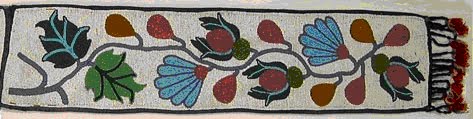
Detail of beadwork from an Ojibwe medicine pouch

Wednesday, September 2, 2009

Clothing in the Dominican Republic

Though the temperature here in the Dominican Republic does not change drastically, the colder winter months are over and the warmer summer months have arrived. The jackets and jeans are now being put away and the shorts and tank tops are now here.

            Since the temperatures range from 68 to 86 degrees, the usual dress for people are shorts, tank tops, skirts, and flip flops- normal clothes found in warm environments. Since there are two rainy seasons here, people commonly wear raincoats and boots for protection from storms. Many restaurants allow beach clothing, so a swim suit with a cover up is acceptable. Due to Spanish influence on the country, people wear large jewelry, such as chunky necklaces, earrings, wooden bangles and more.        

            Though, the changes in temperature are not the only influence on peoples’ clothing choices. Religion is another factor. Tourists should bring modest dress clothing in order to wear to church service. Men should not wear hats indoors and longs sleeves are appreciated and suggested.

            Dress in the Dominican Republic is very similar to that in America. The major difference is that we don’t have four seasons or horrible winter months, and all year long, we wear very colorful clothing due to the Spanish influence on the island. Yellows, oranges, and reds are very popular.


Sports in the Dominican Republic

SPORTS IN THE
DOMINICAN REPUBLIC

Need a new past time? Baseball in the Dominican Republic has become very popular, and the players have become very successful. It has climbed it way to become a favorite of sports fans. Also the Dominican is home to the highest number of players in Major League Baseball.
The Dominican Republic is also home to its own baseball league called The Dominican Winter Baseball League. This league is composed of 6 teams: Cibao Eagles, Eastern Sugar-Makers, Eastern Stars, Cibao Giants, Escogido Lions, and the Licey Tigers. The Dominican Republic has competed in the Baseball World Cup for almost 50 years and is ranked 7th.
If baseball is not for you, the Dominican offers many other popular sports such as: basketball, boxing, and volleyball. After baseball these sports are the most popular in the Dominican Republic. All have teams competing on a national and world level. Sports in the Dominican Republic are becoming more and more popular, and more professional athletes are coming from the country.
Recently the Dominican’s volleyball team played against Poland in the World Grand Prix in Hong Kong. They lost with the score: 22-25, 25-23, 14-25, 25-13, and 15-12. The team also lost to the Netherlands with a score of 25-14, 33-31, and 30-28. Though they did not take home a win, they played well and some of the most outstanding team members include Bethania De la Cruz de Pena and Alagracia Mambru.
So whether you play, or watch from the side lines, sports in the Dominican Republic will never disappoint.

Fashion Week in DR 2009

This past Saturday night was the finale of the inaugural Republica Dominicana Fashion Week.
It was held at the beautiful Port of Sansouci, where 37 Dominican designers and 7 other international designers showed off their goods.
Opening night, the Dominican socialites were out in force. To satisfy this crowd there was a fashion mall filled with tons of sponsors and international franchises offering clothes at deep discounted prices. They were even selling fur coats. Top models Teresa Wajdowics, Yilda Santana, Rosa Gouch and Jeimy Hernandez, and Omahira Mota attendd the Dominican Fashion Week, which also honered Dominican top model Arlenis Sosa.
These guests consolidate the most important event of the local fashion, turning us into a referring one at present, concept and creativity in the area of the Caribbean.
Another show , Dominicana Moda, will return to the DR for its fourth year. The fashion week is scheldued for October 19th through October 24th at the Occidental Hotel El Embajador in Santo Domingo. The organizers of the Official Week of the Fashion of Dominican Republic announced that this year's fashion event will include distinguished New York designer and entrepreneur, Carolina Herrera. She is synonymous of good taste and sophistication. Locals have stated that “Mrs. Herrera will be an honor to have and are ecstatic that she will be able to display her collection as a finishing touch of the week of Dominican fashion 2009, a country to which wants and admires closely.”

Newspaper Article

Obituary:

Patria, Minerva and Maria Teresa Mirabal, daughters of the late Don Enrique Mirabal, died in a tragic car accident on November, 25. The sisters were on the way home from visiting their husbands in La Fortilisa. Their driver lost control of the car, and the vehicle went over the edge of La Cumbre. Their mother and sister, Dede, grieve their death. Dede stated that she “will miss her sisters, and hopes that their children understand what amazing women they were.”
Patria Mercedes Mirabal (February 27. 1924 – November 25, 1960) was the loving wife of Pedrito Gonzalez. She was the proud mother of three beautiful children, Nelson, Noris and Raulito. Patria was the eldest of the Mirabal sisters. She was educated at Inmaculada Concepcion. A woman of faith, her presence will be greatly missed.
Maria Argentina Minerva Mirabal (March 12, 1926 – November 25, 1960) was the devoted wife of Manolo and mother of Minou and Monolito. She attending Inmaculada Concepcion with her sister, and went on to study law at the University. She was a woman who was never afraid to stand up for what she believed in.
Antonia Maria Teresa Mirabal (October 15, 1935- November 25, 1960), often called Mate, was the youngest of the Mirabal sisters. She was married to Leandro and was the caring mother of Jacqueline. Mate was educated with her sisters at Inmaculada Concepcion.
The death of the Mirabal sisters was a tragic incident and they shall be missed. We pray their souls are in heaven.

Dominican Music

In the Dominican Republic, music is and has always been an integral part of their culture. It is their main source of entertainment, as well as something commonly performed at rituals and ceremonies. Traditional Dominican Republic music is very interesting because it is very unique from any other culture. There is typically three main styles of music in the D.R: Merengue, Bachata, and Reggaeton.

Merengue is the oldest style of music, dating all the way back to the 1850s. It first originated in rural, valley regions near the city of Santiago. It all began when Afro-Caribbean slaves practiced sacred rituals involving powerful drumming and sacrifices, similar to the styles in Africa where they came from. The rhythm from those customs would eventually become merengue. Merengue stayed the same for many years until 1970s, about ten years after Trujillo’s death. While the culture of the Dominican Republic changed rapidly along with migration, so did Merengue. They incorporated several more instruments and the music became faster and more complicated. Merengue is still considered to be one of the most important traditional musical styles in the Dominican Republic.

The next musical genre in the Dominican Republic is Bachata, which originated in rural neighborhoods and the countryside. It often deals with romantic ideas and makes appearances in tales of sadness and heartbreak. Bachata is very guitar based music which is an evolved form of Bolero, a slow-tempo Latin music. Throughout much of history, Bachata was degraded by society. Around the mid 1990s, bachata switched from acoustic Spanish guitar to electric steel string. Today Bachata is still very popular and rivals other popular techniques such as salsa and merengue.

The final musical style is Reggaeton, an urban form of music which gained popularity in the mid 1990s with youths of Latin America. This style blends West-Indian music influences of reggae and dancehall with those of Latin America. Reggaeton however has caused some controversy due to the alleged exploitation of women. Many songs also contain violent and explicit lyrics. Reggaeton continues to be the third most popular musical genre around the Dominican Republic.

Juan Luis Guerra

Dominican Sounds Meet Personal Style
By JOHN PARELES
Published: July 21, 2008

There’s no place like home for Juan Luis Guerra, the Dominican Republic’s leading pop songwriter, who won five Latin Grammy Awards last year with his album “La Llave de Mi Corazón” (“The Key to My Heart,” from EMI Latin). Mr. Guerra’s songs, which have become hits across the Spanish-speaking world, are firmly grounded in the Dominican Republic’s upbeat merengue and lilting bachata, along with the island’s various regional styles. But that doesn’t mean Mr. Guerra is in any way provincial.
Robert Caplin for The New York Times
The Dominican star Juan Luis Guerra performing at Madison Square Garden on Friday night.
The song that started his concert on Friday night at Madison Square Garden — part of his first major United States tour since the 1990s — was “La Travesía” (“The Crossing”). As dancers rolled carry-on bags around the stage, the song name-dropped a traveler’s stopovers from Manhattan to Namibia to Kuala Lumpur; he was searching the world, unsuccessfully, for someone like his lover. Another song, “Como Yo” (“Like Me”), preferred her laughter to Beethoven symphonies or van Gogh paintings.
That kind of sweetly monogamous sentiment runs through Mr. Guerra’s songs. His newer lyrics extol lovers as the moon and stars, though their imagery isn’t quite as free-associative as older songs that also compare love to food and medical procedures.
Amid the love songs Mr. Guerra also sang in his reedy, amiable voice about the island’s farmers in “Ojalá que Llueva Café” (“May It Rain Coffee,” a prayer for abundance) and about Christian faith in songs from his devout but thoroughly danceable 2004 album, “Para Ti” (“For You,” from Venemusic). Although he has been a hit maker since the early 1990s, he is not old-fashioned. The song “La Llave de Mi Corazón” is about an American caller to a romantic-advice radio show, who wonders how to court a Dominican woman he met online.
Mr. Guerra led a 20-member lineup of his band, called 440 (which is the frequency of the note A above middle C that many orchestras tune to). Behind them were flashy video screens, yet at the center of the stage were merengue’s traditional percussion instruments, the two-headed drum called a tambora, and the guiro, or scraper.
The band included six horns and six percussionists, and it galloped into the merengues, with Mr. Guerra’s snappy brass-section arrangements and glided through the bachatas. His hits, like “Bachata Rosa” (“Rose Bachata”) and “Burbujas de Amor” (“Bubbles of Love”) have helped transform bachata from a rural Dominican phenomenon to a national pop form.
Mr. Guerra is no traditionalist. He filters Dominican styles through his own pop sensibility, inserting more chords than standard merengues use and letting keyboards share the guitar syncopations of typical bachatas. His music has open borders; he draws on blues, funk, jazz, Caribbean salsa and the guitar lines that Congolese musicians came up with when they reclaimed the Afro-Cuban rumba. But he also digs into Dominican roots.
“El Farolito” (“The Little Light”) uses an older, even more up-tempo kind of merengue — perico ripiao — with 440’s keyboardist and musical director, Janina Rosado, replicating traditional accordion chords on her electric keyboard. The audience members — some perhaps homesick, others swept up in an irresistible beat — were dancing in the aisles.
The Rambunctious Revolutionary

The name Che Guevera is being thrown around nowadays, but some might not have the faintest idea who he is. For those who don’t know, he is a Marxist Revolutionary (and for those who don’t know the philosophy behind Marxism, consult page 2). Fidel Castro’s overthrow of Cuba would have been impossible without this man: a physician, an author, a military theorist, and hopefully in the future, a countercultural symbol.

Ernesto “Che” Guevara was born June 14th , 1928. Originally a medical student, he traveled through Latin America witnessing the dire situation of most civilians in the area. This inspired and brought forth the revelation of world revolution. Initially he worked towards reforming social structures in Guatemala, working alongside the president Jacobo Arbenz Guzman. Afterwards, during a visit to Mexico City, he encountered both Raul and Fidel Castro, and enlisted with their 26th of July movement. The plan was to assault Cuba via the Granma (an old carrier). Approximately 82 men were either killed or executed. Only 22 men survived, but they managed to work together with a group of local “campesinos” under the command of Frank Pais. Guevera was integral to the their success, as he taught many of the recruits how to fight, read, and established a series of factories made for producing everything from bread to grenades. After assaulting the capital for long periods of time, Guevara and his men succeeded in their mission. President Fulgencio Batista evacuated, his current location is unknown. From his workings within the Cuban Revolution, he was promoted to second in command and was critical in cleaning up remnants of the Batista Regime.

As of now, it’s slightly unclear as to what he is doing. Our sources tell us he is doing some work towards agrarian reform (limiting land resources), but most info on this rambunctious revolutionary is unclear. Check in next week to read about Fidel Castro’s rise from soldier to president.

CARNIVAL DOMINICANO

Carnival is a huge part of the rich culture and tradition that surrounds us in the Dominican Republic. Many people here in Santo Domingo keep a countdown going until carnival season comes around. We are happy to say that it is only SIX MONTHS until this happy season returns to put extreme excitement in our lives. This exquisite experience can only be taken part in, inside the Dominican Republic. The vibrant costumes, music full of spirit, and vigorous dancing will be at their peak on the 27th of February, this is the day of Dominican Independence. This exhilarating celebration in Santo Domingo dates back to the 1500’s. Masks are used during this celebration to symbolize spirits. Though this carnival is celebrated throughout the entire country, each small town puts its own twist on it. Diablos Cojuelos seems to be the most popular costume to wear, which is a representation of the “devils”. Carnival goers get very creative with their costumes blending their beliefs with the culture to make the most unique outfit possible.
Another positive aspect of the carnival is its helpful impact on the economy. Tourists come to witness the big event for themselves in masses! But, its not all fun and games, preparation for this occasion begins right after Christmas time. Though starting the preparation for the town may begin in December, some residents begin working on their masks and costumes for next year shortly after the previous carnival ends. This special and diverse event is one everybody should try and attend at least once in their life.

My Article

Trujillo Attempted Assignation

Yesterday on July 24th 1960 the president of Venezuela, Rómulo Betancourt, was severely injured in an attempted assassination. Betancourt started any other day by going around the city in his car, however he did not know that someone had put a bomb in it. Pedestrians who saw the incident happened thought that he was dead. When medical personal got to him he was alive, but had to be rushed to the hospital. The question on everyone’s mind in Venezuela is who could have done this? Well it was no other the our president himself, Jefe Trujillo.

Trujillo has made it perfectly clear that ever since Betancourt got the OAS (Organization of American States) involved with the way he dictates he has been out to get Betancourt. There were always rumors that he wanted to kill Betancourt, but now the rumors have become fact. That’s right, Trujillo actually acted on something he said he would do. Yes I know it shocked me too. No charges have been announced against Trujillo yet but I have a feeling that will not last once when Betancourt becomes well.

As for right now the whole world seems to be against Trujillo for what he attempted to do. They are now all questioning his power. Not only the world but worse the OAS, who “now voted unanimously to serve diplomatic relations with Trujillo’s government” a Venezuela reporter told us.

Little yet is known for how long they will be involved. Or even if the will be coming to the Dominican Republic for a personal visit. But this is for sure, no one in the Dominican Republic is happy with Trujillo, no one is Venezuela is happy with Trujillo and no one in the world either. So my question is, how long until a bomb goes into his car?

PARTYYY OVER Where??? IN THE D.R.!!!

You just flew into the Dominican Republic and you are thinking what to do? There is only one answer to this question, and that answer is PARTYY! Although a new governmental law was recently passed putting regulations on clubs and bars stating that they have to close at 1am; the PARTY NEVER ENDS IN THE D.R. If you want to get the real Dominican Republic experience you want to be out at the clubs. Club sizes range from secluded and private to big and booming. No matter what type of experience you want, it can be easily found. Our clubs are like no other you will find anywhere on the planet.
We have some of the most BOOMING BARS, and CRAZY CLUBS. Native Jersey Shoreian, Brad Guicci said “Bars here are crazy, its just a wild time, me and my posse came up last night and have been partying ever since.” As you could imagine we have a little bit of everything, whether you want to put on your dancing shows and have a dirty dancing night, or just go crazy with a couple friends, YOU CAN DO IT!
Something that you will find in the D.R. that you won’t find anywhere else is that most of our clubs are completely open on one side. This makes it easy to club hop and enjoy the Dominican Republic while still having fun. We have something for every person in the D.R. and you won’t have to look hard to find it.